Are We in an AI Bubble, and Is It About to Burst?
The Al Paradox demands a dual focus: harnessing the foundational shift while hedging against the speculative froth.

 The tech world is buzzing with debate: Is the explosive growth in artificial intelligence a sustainable revolution or an overinflated bubble on the verge of popping?
Recent global stock selloffs have intensified these concerns, with some analysts suggesting the AI-driven market rally may be deflating in a “healthy” way.
Valuations have soared to unprecedented heights, investments have poured in at trillion-dollar scales, and yet cracks are appearing— from corporate reports of limited AI returns to market corrections.
Signs of a Bubble: Hype, Valuations, and Massive Spending
The AI sector has seen extraordinary financial enthusiasm. OpenAI, the company behind ChatGPT, reached a staggering $500 billion valuation in October 2025 following a $6.6 billion share sale, making it the world’s most valuable private company. This came despite reports of significant losses, with some estimates putting burns at billions annually.
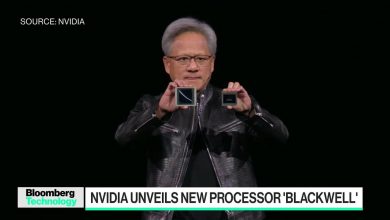
- OpenAI’s valuation growth from 2023 to 2025, showing rapid escalation amid ongoing debates over profitability. NVIDIA, the dominant supplier of AI chips, has been a poster child for the boom. Its stock surged dramatically earlier in the decade but has faced pullbacks in late 2025 amid overvaluation fears.
- NVIDIA stock performance chart in 2025, illustrating peaks and recent corrections. Tech giants are committing hundreds of billions to AI infrastructure, with data center construction booming to support training and inference demands.
- Chart depicting the AI investment boom, highlighting explosive growth in capital expenditures. Critics draw parallels to historical bubbles, particularly the dot-com era of the late 1990s.
- Comparison of the current AI rally to the dot-com bubble, noting similarities in rapid valuation spikes driven by hype. Even industry leaders have acknowledged bubble-like elements. OpenAI CEO Sam Altman stated in 2025 that an AI bubble is ongoing, while Alphabet’s head warned of potential widespread impact if it bursts.
Counterarguments: Real Progress and Fundamentals
Not everyone agrees it’s a pure bubble. Unlike the dot-com era, where many companies had no revenue, today’s AI leaders are generating substantial earnings. NVIDIA, for instance, reported strong revenue growth into fiscal 2026. AI models are becoming more efficient and accessible, driving adoption across industries.
Surveys show increasing enterprise value from AI, and investments continue unabated, with projections for hundreds of billions more in coming years. Some view the current pullback as a necessary “hype correction” rather than a catastrophic burst.
As of mid-December 2025, markets are flashing warning signs. Global selloffs have hit tech stocks, with fears that overspending on AI without proportional returns could trigger a broader correction. Reports indicate many businesses have seen limited ROI from AI pilots, fueling skepticism. Wall Street is divided: Some bet on a pop, while others see stronger fundamentals than past bubbles.
Beyond the Hype: 5 Surprising Truths About the 2025 AI Gold Rush
Evidence strongly suggests we’re in an AI bubble characterized by extreme hype and valuations detached from near-term profits in some cases. However, underlying technological advancements and revenue streams for key players differentiate it from pure speculation.
Recent market turbulence points to a correction underway—potentially healthy if it weeds out excess without derailing innovation. A full burst remains possible if returns disappoint en masse, but as of now, it appears more like a recalibration than a collapse. The AI story is far from over; the question is whether the next chapter brings sustainable growth or painful reckoning.
Déjà Vu in the Digital Age
Artificial Intelligence is the undisputed engine of the current bull market. Investor optimism about its potential to revolutionize industries has sent stocks soaring and fueled a pervasive sense of a digital gold rush. But beneath the surface of this AI-fueled boom lie a set of surprising and counter-intuitive realities.
While the technological revolution is undeniably real, its market structure is a fragile paradox—defined by a dangerous disconnect between infrastructure profits and application-layer value, fueled by circular financing, and threatened by massive, hidden inefficiencies.
This isn’t the first time technology has generated this level of excitement. History offers critical lessons from past hype cycles, particularly the “AI Winters” of the 1970s and 1980s. These were periods when inflated expectations collapsed into years of reduced funding and public skepticism. By examining today’s landscape with the benefit of hindsight, we can uncover the critical truths that separate sustainable innovation from speculative frenzy.
It’s Not One Boom, It’s Two Separate Markets
The current AI market is not a single, uniform bubble but a “bifurcated structure” with two distinct layers operating under different rules.
First is the Foundational Technology Shift. This layer is comprised of highly profitable infrastructure companies—the chipmakers and major cloud providers—that form the backbone of the AI revolution. Their growth is supported by robust revenue and substantial cash flow. Companies like Nvidia and Alphabet, for example, trade at relatively moderate estimated price-to-earnings (P/E) multiples of under 30x, reflecting their status as established, cash-generating anchors.
Second is the Liquidity and Speculation Bubble. This layer is made up of downstream application companies and private “mega-unicorns” whose valuations are based on future promise rather than current profits. This is where speculative excess is most apparent. Public companies like Palantir Technologies (PLTR) and Snowflake Inc. (SNOW) have been trading at over 180 and almost 140 times their estimated profits, respectively. The private market is even frothier, exemplified by Databricks, which recently announced a $4 billion funding round at a $134 billion valuation—a stunning 34% increase from just four months prior.
This split is a classic feature of a speculative bubble, where a legitimate technological shift—in this case, AI infrastructure—provides cover for irrational exuberance in companies that have yet to prove a sustainable business model, echoing the dynamics of the dot-com era. The core risk isn’t that AI technology is worthless; it’s that the high-growth expectations for these non-profitable entities are premature and built on a foundation of speculation.
The Trillion-Dollar Promise vs. The Zero-ROI Reality
There is a shocking disconnect between the predicted economic impact of AI and the actual value businesses are deriving from it today.
On one hand, the long-term potential is staggering. McKinsey projects that AI could generate up to $23 trillion in annual economic value by 2040. An analysis by Anthropic suggests that current AI models alone could increase US labor productivity growth by 1.8% annually over the next decade.
On the other hand, the present reality of enterprise adoption tells a different story. This disconnect was starkly highlighted by the UK’s Bank of England, which pointed to MIT research revealing a critical vulnerability: 95% of organizations are getting zero return from their investments in generative AI.
This massive gap between colossal spending and negligible returns sets the stage for a critical “earnings reality check.” Analysts anticipate this moment will arrive between the fourth quarter of 2025 and the second quarter of 2026, and it is widely viewed as a probable trigger for a major market correction. This staggering lack of return on investment is made even more perilous by the financial engineering used to fund it, where money often flows in circles rather than creating new value.
The AI Money Is Going in Circles
A significant portion of the capital fueling the AI boom isn’t creating new value—it’s flowing in a self-reinforcing loop, creating systemic risks that echo past financial scandals.
This process is known as circular financing. In simple terms, chipmakers and cloud providers invest capital into AI labs and startups. Those startups then use that same capital to buy chips and data center capacity from their investors. Nvidia, for example, has invested in customers like OpenAI, xAI, and CoreWeave. This creates a cycle where Nvidia invests in OpenAI, OpenAI uses the funds to buy Nvidia’s hardware, and those purchases in turn boost Nvidia’s reported profits.
This dynamic has drawn sharp criticism from prominent short sellers like Jim Chanos, who famously predicted the fall of Enron. In an interview with Yahoo Finance, he argued:
“They’re [Nvidia is] putting money into money-losing companies in order for those companies to order their chips.”
Chanos draws a direct parallel to the dot-com era’s Lucent scandal. In that case, Lucent provided loans to its loss-making clients so they could afford to buy its equipment. When those clients inevitably failed, Lucent was left with billions in losses. While Nvidia has issued detailed rebuttals denying that it relies on vendor financing for revenue growth, the core financial dynamic remains: the market’s biggest suppliers are injecting capital into their largest customers, creating a systemic dependency that makes the entire ecosystem vulnerable to a downturn in demand.
Your AI Query Has a Hidden Environmental Cost
Behind the sleek digital interfaces and abstract algorithms of the AI boom lies a massive and growing physical footprint with significant environmental consequences.
The energy consumption of data centers is soaring. In 2023, data centers already consumed 4.4% of all U.S. electricity, a figure that could triple by 2028. One stark projection suggests that data centers could account for 20% of global electricity use by 2030–2035, placing an immense strain on power grids.
AI is exceptionally resource-intensive because training large models requires thousands of GPUs to run continuously for months. Beyond electricity, this has cascading environmental impacts:
- Water Consumption: AI data centers require vast amounts of water for cooling, a critical issue in regions experiencing water scarcity.
- Electronic Waste: The short lifespan of high-performance GPUs creates a growing problem of e-waste as components are frequently discarded.
- Resource Depletion: Manufacturing these components requires the extraction of rare earth minerals, contributing to environmental degradation.
These are not just ecological footnotes; they are material business risks. Soaring energy needs expose companies to volatile power prices, intense water consumption creates operational risks in drought-prone regions vital for data centers, and the reliance on rare earth minerals introduces significant supply chain vulnerabilities. Future AI profitability will be directly tied to mitigating these physical-world constraints. These escalating environmental and resource costs represent a ticking time bomb for profitability, a factor often overlooked in valuations built on hype rather than sustainable operations.
Companies Are Wasting Billions on the “Wrong” AI
In a sector obsessed with optimization, a multi-billion-dollar market inefficiency is hiding in plain sight: companies are systematically overpaying for AI.
A working paper from the Linux Foundation reveals that billions of dollars are being wasted as organizations pay a premium for closed, proprietary models from providers like OpenAI or Google. In many cases, cheaper and highly capable open models would be sufficient for their needs.
This structural inefficiency is driven by several key factors:
- Switching costs: Engineering teams have already optimized their workflows around specific proprietary models, and changing them creates operational friction.
- Brand trust and perceived safety: Organizations often feel more comfortable with established, well-funded providers, even when the premium isn’t justified by performance.
- Information asymmetries: The market for AI models is evolving so rapidly that many engineering teams are simply unaware of the latest open models or incorrectly assume that “open” means “less safe.”
The irony is that a field dedicated to finding efficiencies is currently defined by a massive, structural misallocation of capital. This multi-billion-dollar inefficiency in model selection directly contributes to the 95% zero-ROI figure, demonstrating that the problem isn’t just if companies will see returns, but how they are squandering capital before they even get started.
Conclusion: Navigating the AI Paradox
The AI technological revolution is real and its potential is transformative. However, its financial and economic underpinnings are riddled with paradoxes, hidden risks, and unsettling echoes of past speculative bubbles. From circular financing and zero-ROI investments to massive market inefficiencies and overlooked physical constraints, the path forward is far from certain.
As the AI supercycle moves from promise to proof, the defining question is no longer about technological potential but financial sustainability. Which of today’s innovators have built enduring business models, and which are simply riding a wave of circular capital destined to crash on the shores of the next earnings report?