AI is Coming for Your Job. Now What?
The apprehension surrounding AI’s role in the workforce is far from unfounded. Reports indicate that AI could displace millions of jobs in the coming years, particularly those involving routine, repetitive tasks.

 In an era where artificial intelligence seems to lurk behind every digital corner, the whisper has turned into a roar: “AI is going to replace your job.”
This belief strikes at the heart of modern anxieties, fueling fears of widespread unemployment, economic instability, and a loss of purpose in daily life.
For many, the rapid advancements in AI— from generative tools like ChatGPT to sophisticated automation systems— evoke visions of a dystopian future where human labor becomes obsolete.
Workers in fields ranging from manufacturing to creative industries wake up wondering if their skills will soon be deemed irrelevant. Yet, beneath this fear lies a more nuanced reality: AI isn’t just a job destroyer; it’s a catalyst for profound transformation in how we work, creating opportunities alongside disruptions.
Understanding the Fear: Job Displacement in the Age of AI
The apprehension surrounding AI’s role in the workforce is far from unfounded. Reports indicate that AI could displace millions of jobs in the coming years, particularly those involving routine, repetitive tasks.
For instance, the World Economic Forum’s Future of Jobs Report 2023 projected that AI and automation would eliminate 85 million jobs globally by 2025, with similar trends extending into 2026 and beyond.
Goldman Sachs echoed this sentiment, estimating that AI might replace the equivalent of 300 million full-time jobs worldwide, affecting a quarter of work tasks in the US and Europe. Sectors like manufacturing, data entry, customer service, and transportation are particularly vulnerable. A comprehensive analysis suggests that by 2027, 7.5 million data entry positions could vanish, while trucking and retail cashier roles face automation risks of up to 65% by 2025.
This fear is amplified by real-world examples. In manufacturing, AI-driven robots have already reduced entry-level hiring, with projections showing two million jobs at risk by 2026. White-collar workers aren’t immune either; paralegals, graphic designers, and even some coding roles could see significant reductions as AI handles routine cognitive work. As one discussion on social platforms notes, ”
By 2026, nearly 4 in 10 companies expect to replace workers with AI,” highlighting the acceleration toward roles devoid of creativity or empathy being phased out. These shifts disproportionately affect lower-wage workers, who are up to 14 times more likely to need occupational changes, and women, with 58.87 million in the US exposed to high automation risk compared to 48.62 million men.
The psychological toll is immense. People fear not just job loss but obsolescence in a world where machines outperform humans in speed and efficiency. This mirrors historical panics during the Industrial Revolution, when machines displaced manual laborers, or the internet era, which upended travel agents and brick-and-mortar retail. Yet, as history shows, these transitions often lead to net gains— if societies adapt.
Beyond Replacement: AI as a Transformer of Jobs
While displacement grabs headlines, a deeper look reveals that AI is more likely to transform jobs than eradicate them entirely. Research from organizations like McKinsey indicates that by 2030, up to 30% of hours worked in the US could be automated, accelerated by generative AI, but this doesn’t equate to wholesale job loss.
Instead, AI augments human capabilities, handling mundane tasks and allowing workers to focus on higher-value activities. PwC’s 2025 Global AI Jobs Barometer found that AI-exposed industries have seen accelerated revenue growth since 2022, making workers more valuable rather than redundant. In fact, when AI impacts only a subset of tasks within a role, employment in that occupation can actually increase, as seen in MIT studies tracking AI adoption from 2010 to 2023.
Jobs for the Future’s AI-Ready Workforce Report emphasizes that most occupations—78% of high-employment roles in key industries like healthcare, manufacturing, and transportation—will rely on uniquely human skills such as critical thinking, communication, and strategic planning, which AI can enhance but not replace. For example, in healthcare, AI might analyze medical images, freeing doctors for patient interaction.
In creative fields, tools like AI agents assist with ideation, but human judgment remains irreplaceable. As one expert observes, “AI is replacing people who do functional jobs… entrepreneurs are not worried about AI—their jobs are far more complex.”
Moreover, AI is a job creator. The same World Economic Forum report that warns of 85 million displacements predicts 97 million new roles by 2025, a net gain of 12 million positions. Emerging fields include AI ethics officers, prompt engineers, and human-AI collaboration specialists.
Cognizant’s research suggests that 93% of jobs could be impacted by AI today—six years ahead of earlier forecasts—potentially shifting $4.5 trillion in US labor value, but much of this involves augmentation rather than elimination. The OECD and Brookings Institution highlight how AI drives productivity, digital access, and new occupations, outpacing other trends in labor market disruption.
Challenges and Pathways Forward
Despite the optimism, challenges loom. Skill gaps are widening; 77% of new AI-related jobs require advanced degrees, leaving many behind.
An estimated 12 million occupational transitions may be needed by 2030, with entry-level positions particularly at risk. Geographic and demographic disparities exacerbate this, as North America leads in adoption while regions with lower AI skill demand see 3.6% lower employment in vulnerable occupations.
Addressing these requires proactive measures: reskilling programs, policy interventions like those in Biden’s AI executive order, and public-private partnerships.
Microsoft’s 2025 New Future of Work Report stresses adaptability, while experts predict a human-centric trend alongside AI, emphasizing collaboration over competition. As social discussions point out, organizational inertia may slow mass changes, but if AI advances to handle all work, broader societal shifts— like universal basic income or redefined workweeks— could emerge.
Embracing the AI-Infused Horizon
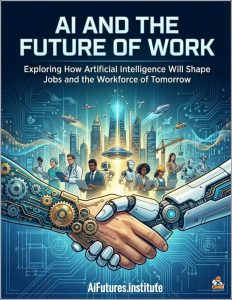
The fear that “AI is going to replace your job” is a starting point, not the endgame. History teaches us that technological evolutions displace but also elevate. AI’s true power lies in transforming the future of work into one where humans leverage machines for creativity, efficiency, and innovation.
By focusing on upskilling, ethical integration, and inclusive policies, we can turn anxiety into opportunity. The workforce of tomorrow won’t be human versus AI— it will be human with AI, forging a path to prosperity that benefits all.