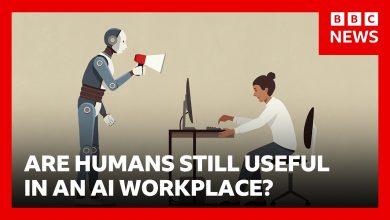
Jack Dorsey’s AI-Driven Overhaul at Block: A Watershed Moment for the Future of Work
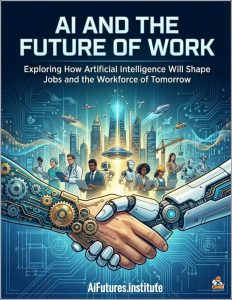
The future of work will reward those who adapt swiftly, but without equitable safeguards, it risks leaving millions behind in an increasingly automated world.

 Billionaire Jack Dorsey’s Block surged in premarket trading on Friday, after he announced the financial tech firm would cut its workforce nearly in half as he anticipates AI to increase efficiency, leading companies to reduce headcount.
In a move that sent shockwaves through the tech industry and beyond, Jack Dorsey, CEO of Block (formerly Square), announced on February 26, 2026, that the company would reduce its workforce by nearly 40%, cutting over 4,000 jobs and shrinking the organization from more than 10,000 employees to just under 6,000.
This drastic restructuring, explicitly tied to advancements in artificial intelligence (AI), marks one of the most direct acknowledgments yet that AI is not just augmenting human labor but replacing it on a massive scale.
Dorsey’s decision, detailed in a shareholder letter and an X post, underscores a pivotal shift: AI tools are enabling smaller, more efficient teams to achieve greater output, prompting questions about the broader implications for employment, productivity, and economic inequality.
The Layoffs: Details and Rationale
Block’s announcement came amid a strong financial performance in 2025, with gross profit growth and improved profitability. Yet, Dorsey emphasized that the cuts were not driven by business woes but by a fundamental transformation in how companies operate. In his shareholder letter, he stated: “A significantly smaller team, using the tools we’re building, can do more and do it better.
And intelligence tool capabilities are compounding faster every week.” The company is embedding AI across its operations, from decision-making and product development to risk management and customer service. Tools like Square AI for real-time insights and Moneybot in Cash App for financial guidance exemplify this shift toward “agentic AI infrastructure” that automates workflows and allows customers to build their own features.
Dorsey’s X post provided a candid, human touch to the announcement, written in his signature lowercase style:
“we’re making @blocks smaller today… today we’re making one of the hardest decisions in the history of our company: we’re reducing our organization by nearly half…
we’re not making this decision because we’re in trouble. our business is strong… but something has changed.
we’re already seeing that the intelligence tools we’re creating and using, paired with smaller and flatter teams, are enabling a new way of working which fundamentally changes what it means to build and run a company.”
He opted for a single, large-scale cut over gradual reductions to avoid eroding morale and focus, adding that affected employees would receive 20 weeks of salary plus additional benefits.
The market responded enthusiastically, with Block’s shares surging up to 25% in after-hours trading, reflecting investor optimism about AI-driven efficiencies boosting profitability. Analysts from firms like Morgan Stanley and Goldman Sachs upgraded the stock, noting the cuts were concentrated in engineering roles, where Block’s in-house AI platform, Goose, could take over much of the work.
Reactions on X were mixed, blending shock, sarcasm, and analysis. One user quipped, “Congrats team! We made $24 billion in profits last year and I wanted to do something special for you all,” accompanied by a meme of layoffs. Another lamented, “Imagine being laid off because of AI, having this explained to you by a note written entirely in lower case and the market celebrates this with a 24% increase in share price.”
Tech observers pointed out Dorsey’s history with overstaffing at Twitter (now X), suggesting many companies could trim headcounts even without AI.
Broader Implications: AI and the Future of Work
Dorsey’s blunt attribution of the layoffs to AI—”intelligence tools have changed what it means to build and run a company”—has amplified ongoing debates about job displacement. He predicted that most companies would make similar cuts within the next year, a forecast that aligns with rising AI-linked layoffs globally, exceeding 61,000 since November 2025.
This event comes amid viral essays warning of a “global intelligence crisis,” where AI could trigger unemployment spikes above 10%, a stock market correction, and a deflationary spiral.
Research paints a nuanced picture. The International Monetary Fund estimates AI could affect 40% of global jobs, with advanced economies facing higher exposure. A Stanford study found a 13% employment decline for young workers (ages 22-25) in AI-vulnerable roles since late 2022.
The World Economic Forum’s 2025 Future of Jobs Report projects 170 million new roles created by 2030, offset by 92 million displacements, netting 78 million jobs—but with half of employers planning AI-driven workforce reductions. Goldman Sachs warns of up to 300 million full-time jobs equivalent displaced worldwide, though new opportunities in AI skills could mitigate this.
Paradoxes abound. While AI promises productivity gains—companies using it for over a year report 11.5% net increases—job losses often precede these benefits, straining economies in the transition.
Forrester forecasts AI accounting for 6% of U.S. job losses through 2030 (about 10.4 million roles), with the 2025-2030 period marked by disruption as careers shift. Entry-level white-collar jobs, like those in software and finance, are hit hardest, potentially wiping out half in five years. Yet, demand for human-unique skills—creativity, emotional intelligence, and complex problem-solving—may rise, creating roles in AI oversight, ethics, and integration.
This displacement could exacerbate inequality, as benefits accrue to AI owners while workers face “ghost GDP”—output that doesn’t circulate through consumer spending. Economists warn of a “vibecession,” where high unemployment meets stubborn inflation, forcing rapid reskilling.
Governments and companies must invest in training; for instance, regions with high AI skill demand see 3.6% lower employment in vulnerable occupations after five years, highlighting the need for proactive adaptation.
A Call to Action for the AI Era
Block’s layoffs are a harbinger: AI isn’t a distant threat but a present reality reshaping work. For workers, the message is clear—embrace lifelong learning and AI literacy to thrive in hybrid roles.
For companies, Dorsey’s approach offers a blueprint: honest, decisive integration of AI to foster innovation, though at the cost of human capital. Society faces tougher choices—policies like universal basic income, retraining subsidies, or AI profit-sharing could cushion the blow. As Dorsey put it, “I’d rather get there honestly and on our own terms than be forced into it reactively.”
The future of work will reward those who adapt swiftly, but without equitable safeguards, it risks leaving millions behind in an increasingly automated world.