Are Humans Useless in the AI Workspace?
AI will not make humans obsolete but will automate repetitive tasks, freeing workers for creativity, empathy, and strategy. Success demands upskilling, workflow redesign, and human-AI collaboration to thrive by 2030.

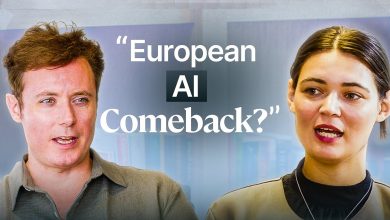
 In this timely BBC News discussion from the AI Decoded series, presenter Christian Fraser and co-host Priya Lakhani (CEO of Century Tech) explore whether artificial intelligence will render humans obsolete in the workplace or instead force a fundamental redesign of how work gets done.
Joined by experts Bernard Marr (Forbes AI writer and advisor) and Ella Haelmans (associate professor researching AI adoption), the panel examines the opportunities, risks, and necessary adaptations for workers, companies, and education systems.
AI as a “Superpower” That Transforms—Rather Than Simply Replaces—Jobs
The conversation opens with the consensus that AI is unlikely to cause mass unemployment in a straightforward way. Instead, it will automate repetitive, tedious tasks, “hollowing out” parts of jobs that people often dislike.
This frees humans to focus on higher-value activities like creativity, strategic judgment, empathy, and relationship-building. Bernard Marr breaks down three evolving forms of AI driving this shift:
- Generative AI (e.g., tools like ChatGPT) for analyzing data, drafting content, and supporting decision-making.
- Agentic AI that handles autonomous, repetitive processes, such as answering HR queries about pensions.
- Physical AI and robotics, which are learning from video demonstrations to perform more complex physical or administrative tasks.
Marr argues that these technologies act as a “superpower,” making jobs more enjoyable by removing drudgery while elevating the human elements that AI still struggles with.
Priya Lakhani emphasizes the need for upskilling and continuous learning. Companies that invest in their people—rather than just technology—will foster innovation and maintain a competitive edge. She stresses that humans must develop skills in strategic oversight to thrive alongside AI tools.
The Reality of AI Adoption: Shadow Use and Social Costs
Ella Haelmans shares research from 2022 onward showing that employees are rapidly adopting AI tools like ChatGPT on their own, often without managerial approval. Workers use them for brainstorming, research, and polishing text. While this boosts individual productivity, it has unintended consequences: reduced interactions with colleagues, weaker social ties, and diminished on-the-job learning—especially in hybrid or remote environments.
The panel notes that many organizations purchase AI tools (e.g., Microsoft Copilot) but see little return on investment. Studies cited include MIT research suggesting 95% of organizations gain no meaningful ROI from AI, while McKinsey highlights that only a tiny fraction achieve significant results. Job descriptions and workflows often remain outdated, failing to integrate AI effectively.
Education, Skills, and the Future Workforce
A notable segment features insights from BlackRock CEO Larry Fink, who argues that AI may shift opportunities toward trades (e.g., electricians, plumbers) and applied skills over traditional four-year college degrees for some paths. The discussion calls for rebalancing the post-WWII emphasis on university education.
Key future-proof skills highlighted include:
- Understanding how AI works
- Critical thinking and strategic problem-solving
- Empathy and emotional intelligence
- Learning agility and adaptability
Experts warn against companies overly “flattening” their structures by eliminating entry-level roles to cut costs with AI. Preserving junior positions is essential for building talent pipelines, company culture, and mentorship. One cautionary example: a company that replaced 700 jobs with an AI chatbot later faced quality issues and customer demand for human empathy, forcing it to rehire.
Strategic Advice for Leaders and Workers
The episode concludes with practical takeaways:
- Successful leaders will rethink workflows entirely around AI, using it for efficiency (e.g., filtering emails or generating content) while maintaining human oversight to catch errors and “quirks.”
- Over-reliance on AI risks poor-quality outputs and eroded workplace relationships.
- For individuals, the message is clear: adapt through lifelong learning, focus on uniquely human strengths, and treat AI as a collaborator rather than a threat.
Overall, the AI Decoded panel delivers a balanced, optimistic-yet-cautious view: AI will reshape work dramatically by 2030, automating routine elements and demanding new skills, but humans remain essential for judgment, creativity, and connection. The winners will be those who redesign workplaces thoughtfully, invest in people, and embrace collaboration between human ingenuity and machine capability.