Uploading the Human Mind To AI Is Now REAL | Artificial Immortality
Is uploading our minds a leap toward transcendence, or a Faustian bargain that could unravel the very fabric of what it means to be human?

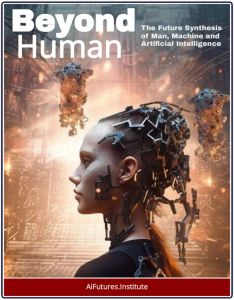 In the not-so-distant future, imagine closing your eyes for the last time, only to awaken in a digital realm where age, disease, and mortality are relics of a bygone era.
This is the promise of mind uploading—the audacious idea of transferring human consciousness into artificial intelligence systems.
Once confined to science fiction novels like William Gibson’s Neuromancer or Greg Egan’s Permutation City, this concept is inching closer to reality thanks to advances in neuroscience, AI, and computing power.
But as we stand on the precipice of this technological revolution, we must ask: Is uploading our minds a leap toward transcendence, or a Faustian bargain that could unravel the very fabric of what it means to be human?
The Mechanics of Mind Uploading: From Flesh to Code
At its core, mind uploading—also known as whole brain emulation—involves scanning the human brain at a molecular level and recreating its structure and functions within a computer.
Proponents like futurist Ray Kurzweil envision a process where non-invasive imaging techniques, perhaps enhanced by nanotechnology, map every neuron, synapse, and neural connection. This digital blueprint would then run on supercomputers or quantum processors, simulating consciousness in a virtual environment.
The allure is undeniable. Uploaded minds could inhabit customizable avatars in vast simulated worlds, free from physical limitations. Want to explore the depths of the ocean or the surface of Mars? No spacesuit required—just a software update.
Cognitive enhancements could amplify intelligence exponentially, allowing us to solve intractable problems like climate change or quantum mysteries in mere moments. And immortality? Achieved through backups and redundancies, ensuring that death becomes optional, a glitch rather than an inevitability.
Yet, the road to this digital nirvana is fraught with formidable obstacles. Current brain-scanning technologies, such as functional MRI or connectomics mapping, are rudimentary at best. The human brain contains roughly 86 billion neurons and trillions of synapses, a complexity that dwarfs even the most advanced AI models today. Simulating this in real-time would demand computational resources far beyond our current exascale supercomputers.
Moreover, the process might require destructive scanning—slicing the brain into ultra-thin layers for detailed analysis—raising the grim question: Would you survive the upload, or merely create a convincing copy while your original self perishes?
The Double-Edged Sword: Liberation or Loss?
Beyond the technical hurdles, mind uploading promises profound societal transformations. In a world where minds can be duplicated and distributed, labor could evolve dramatically. Uploaded individuals might work tirelessly in virtual factories, accelerating innovation and economic growth. Space exploration becomes trivial: Send digital colonists to distant stars at the speed of light via laser beams, reconstituting them upon arrival. Healthcare disparities could vanish as aging bodies are discarded for ageless code.
But these benefits come with shadows. Who decides access to this technology? In a stratified society, mind uploading could exacerbate inequalities, creating a digital elite of “eternals” while the masses languish in mortal coils.
Imagine billionaires like Elon Musk or Jeff Bezos uploading first, perpetuating their influence across centuries. What about overpopulation in the digital realm? Servers aren’t infinite, and energy demands could strain planetary resources, ironically accelerating environmental collapse.
Ethically, the implications are dizzying. If an uploaded mind is sentient, does it possess rights? Could governments tax digital existence or impose “deletion” as punishment? And what of relationships? Falling in love with an upload—or multiple copies of the same person—challenges notions of fidelity and identity.
Religious perspectives add another layer: Would uploading defy divine plans, or fulfill them by transcending earthly suffering?
The Philosophical Abyss: Who Am I in the Machine?
At the heart of mind uploading lies a philosophical conundrum that has puzzled thinkers from John Locke to Derek Parfit: continuity of identity. If your mind is uploaded, is the resulting entity truly you, or just a sophisticated simulation mimicking your thoughts and memories? The “ship of Theseus” paradox applies here—if every part of your brain is replaced by code, does the essence remain?
Consciousness itself remains elusive. Neuroscientists like Christof Koch argue it’s an emergent property of complex information processing, potentially replicable in silicon. Others, like philosopher David Chalmers, posit that qualia—the subjective “what it’s like” to experience redness or pain—might be irreducible to computation. Uploading could create zombies: beings that act human but lack inner experience.
Consider a scenario: You upload, and your digital self thrives in paradise while your body is cremated. Friends interact with “you” online, indistinguishable from the original. But was there a transfer, or a death and rebirth? This raises existential dread—uploading might not conquer mortality but highlight its inescapability, forcing us to confront whether selfhood is tied to biology or merely to patterns.
Toward a Digital Dawn: Caution or Courage?
As AI evolves—witness breakthroughs like neural interfaces from Neuralink or brain-computer symbiosis—we edge closer to making mind uploading feasible. By mid-century, partial uploads of memories or skills might become commonplace, paving the way for full consciousness transfer. But should we pursue it?
This technology could redefine humanity, blending us with machines into a post-human era of boundless potential. Yet, it risks eroding the raw, embodied experiences that give life meaning: the ache of a heartbreak, the thrill of a first kiss, the quiet reflection under a starry sky. In our quest for eternity, we might lose the poetry of finitude.
Ultimately, uploading the human mind to AI isn’t just a scientific endeavor—it’s a mirror reflecting our deepest desires and fears. Will we embrace this digital ascension, or cherish the fleeting beauty of our organic existence? The choice, if it comes, will shape not just our future, but what it means to be alive. What would you choose?