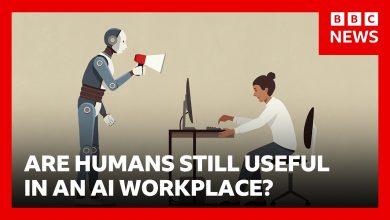
The Ai Transformed Future of Work: Ushering in The Dawn of Human-AI Collaboration
AI is transforming work like a second, accelerated Industrial Revolution, shifting toward human-AI collaboration to amplify human potential while requiring intentional upskilling and responsible policies to shape a prosperous future.

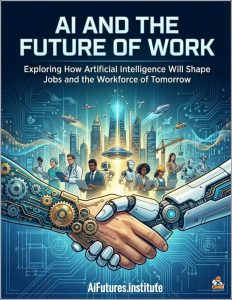 We stand at the threshold of the most profound reorganization of work since the Industrial Revolution.
Ai is no longer a distant promise or experimental tool—it is an active partner in offices, factories, hospitals, studios, and boardrooms around the world.
Worker access to AI technologies surged by 50% in 2025 alone, agentic systems are moving from pilot projects to production at scale, and organizations are grappling with a stark reality:
93% of jobs can now be impacted in some meaningful way by AI, with trillions of dollars of labor value shifting from purely human effort to human-AI orchestration.
This is not hyperbole. Reports from the World Economic Forum, IMF, McKinsey, Deloitte, PwC, Gartner, and others paint a remarkably consistent picture: AI is not simply automating routine tasks; it is rewriting the very definition of what constitutes “work.”
Nearly 40% of global jobs face significant exposure to AI-driven change. Entry-level white-collar positions are being compressed or eliminated at accelerating rates. Yet at the same moment, new roles are emerging, new skills are commanding premiums, and entire categories of human capability—creativity, emotional intelligence, ethical judgment, complex problem-solving in ambiguous contexts—are being revalued precisely because machines still struggle to replicate them authentically.
The tension is palpable. CEOs continue to forecast explosive AI-driven growth and pour hundreds of billions into compute infrastructure, while many workforces experience the more sober reality: most early AI investments have yet to deliver transformative returns.
Layoffs framed as “automation efficiency” appear regularly in earnings calls. Public anxiety is rising—surveys show a majority of people fear net job destruction over the coming decades. At the same time, forward-looking companies are discovering that teams intentionally redesigned around human-AI partnership are twice as likely to exceed revenue targets.
This book is written for exactly this moment of asymmetry and possibility.
We will not pretend the transition will be painless or evenly distributed. Some occupations will shrink dramatically; others will be born that did not exist five years ago. Regions, generations, and educational backgrounds will experience the upheaval differently. Young people entering the workforce face a particularly sharp challenge: the very entry-level roles that historically served as apprenticeships are among the most exposed to automation.
Yet the evidence also points to a more hopeful trajectory than pure displacement. When organizations treat AI as an amplifier rather than a replacement—when they invest seriously in upskilling more than half their workforce, redesign workflows for genuine augmentation, and nurture “power skills” (resilience, curiosity, social influence, creative synthesis)—productivity gains can be extraordinary and human agency can actually expand.
The most successful path forward appears to be the deliberate creation of hybrid human-AI teams where each party performs the work it does best.
Over the chapters ahead, we examine:
- How agentic AI and multi-modal systems are already reshaping daily workflows in 2026
- Which skills are rapidly appreciating in value—and which are quietly depreciating
- The emerging geography of opportunity: where AI creates net job growth versus net contraction
- The leadership mindsets and organizational designs that separate companies thriving in the AI era from those merely surviving it
- The policy, education, and social choices that could turn disruption into broad-based prosperity rather than polarization
The AI transformation of work is not a question of whether it will happen, but of how we choose to shape it. The decisions made in boardrooms, classrooms, union halls, and government offices over the next 36–60 months will determine whether this wave becomes the greatest amplifier of human potential in a century—or the source of the deepest economic and social cleavage since the early 20th century.
This book aims to equip readers—whether you are a C-suite executive, a mid-career professional, a student, a policymaker, or simply someone who wants to understand where work is headed—with clarity, evidence-based foresight, and practical pathways through the change already underway.
The future of work is being written right now. Let us write it intentionally.