 Standard Chartered CEO Bill Winters has made headlines with a blunt declaration.
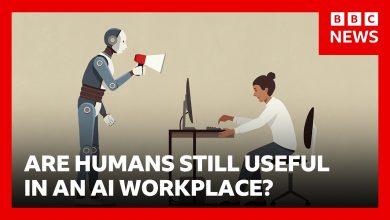
Outlining plans to cut thousands of jobs—primarily in back-office functions like compliance, HR, and risk management—he described the shift as replacing “lower-value human capital” with AI and technology investments.
The phrasing sparked immediate backlash for its dehumanizing tone. Winters later clarified that it reflected changes in work rather than the inherent value of people, emphasizing redeployment and efficiency gains.
Yet the remark cut through the corporate euphemisms to reveal a raw truth: for many executives, AI’s primary near-term value lies in optimizing labor costs and boosting metrics like income per employee.
This moment is more than a PR misstep. It crystallizes a pivotal decision facing humanity. Will we steer artificial intelligence down a narrow path of incremental corporate efficiency—further concentrating wealth among those who own the models, data, and capital—or will we seize this technological inflection to confront humanity’s most intractable problems: poverty, chronic illness, educational failure, and environmental degradation?
The Efficiency Trap
The current trajectory is understandable from a purely financial perspective. AI excels at pattern recognition, automation of repetitive tasks, and scaling operations without proportional human overhead.
Banks like Standard Chartered see opportunities to streamline global operations, especially in high-volume hubs. Across industries, similar logic applies: predictive maintenance in manufacturing, algorithmic trading in finance, automated content moderation in tech. Productivity surges. Margins expand. Shareholder value rises.
But this path risks entrenching a winner-take-most dynamic. Historical technological shifts—from the Industrial Revolution to computing—displaced workers while creating new roles, often with net societal gains over decades. AI differs in speed and scope.
It targets cognitive work alongside physical, potentially hollowing out middle-skill jobs faster than societies can adapt. Economists warn of an “M-shaped” economy: gains at the high end for AI developers, strategists, and capital owners; pressure in the middle; and persistent challenges at the low end without massive reskilling.
The deeper issue is vision. When AI is framed primarily as a labor substitute, we optimize for “human capital” metrics rather than human potential. Winters’ language, even if walked back, echoes a reductive view: people as interchangeable inputs. This mindset prioritizes billionaires’ balance sheets over broader prosperity. It invites backlash—regulatory crackdowns, populist revolts, talent flight to more purposeful projects—and squanders AI’s abundance-creating power.
An Ambitious Alternative: AI as Humanity’s Amplifier
Imagine a different deployment. AI systems designed not merely to replace routine analysis in banking but to accelerate breakthroughs in neglected areas.
In healthcare, AI could transform chronic illness management. Models already assist in diagnostics, drug discovery, and personalized treatment. Scaled thoughtfully, they could predict disease onset from wearable data, optimize global supply chains for affordable medicines, and democratize expert-level care in underserved regions—potentially adding years of healthy life while slashing costs.
In poverty alleviation, AI-powered tools for agriculture (crop optimization, pest prediction), microfinance (better risk assessment without bias), and education (personalized tutoring at scale) offer compounding returns. Early examples show AI amplifying local entrepreneurship rather than displacing it.
Broader applications beckon: climate modeling with unprecedented precision, scientific research accelerated by AI co-pilots sifting through literature and generating hypotheses, legal systems streamlined for faster justice, and creative industries exploding with new tools for human expression.
This isn’t utopian fantasy. It’s an engineering and incentive problem. AI’s marginal cost approaches zero once trained, enabling radical abundance if aligned with access and equity. The same technology optimizing bank compliance could audit aid distribution for corruption or model interventions that break poverty traps.
The Decision Point
Society stands at a fork. The default path—market-driven, short-term focused—favors efficiency for incumbents. Without intervention, AI may widen inequality before its benefits diffuse. The alternative requires deliberate choices:
- Incentives and Policy: Tax structures, subsidies, and public procurement that reward AI for social impact. Public-private partnerships for open datasets in health and education. Intellectual property regimes that balance innovation with diffusion.
- Talent and Culture: Redirecting top AI researchers from ad optimization or financial engineering toward fundamental science and human challenges. xAI’s ethos of understanding the universe exemplifies curiosity-driven progress over pure extraction.
- Ethics and Governance: Robust frameworks for transparency, bias mitigation, and safety. We must address job transitions humanely—through retraining, portable benefits, or even explorations like universal basic income—without stifling dynamism.
- Measurement: Move beyond GDP and corporate earnings to metrics of human flourishing: healthspan, educational attainment, meaningful work, and optionality.
Challenges abound. AI safety, alignment with human values, energy demands, geopolitical competition, and the risk of misuse (deepfakes, autonomous weapons, surveillance states) cannot be ignored. Central planning risks stagnation; unchecked markets risk myopia. The sweet spot lies in vibrant ecosystems where private innovation meets public purpose.
Toward a Worthy Future
Bill Winters’ comments, however clumsy, performed a service by making the stakes explicit. AI will not be neutral. It will reflect the priorities we embed in its development and deployment.
Humanity’s greatest strength has never been raw labor but ingenuity, empathy, and the drive to explore. AI, as a tool of unprecedented leverage, can diminish us if we treat it as a replacement for “lower-value” humans. Or it can elevate us all—freeing time for creativity, care, and discovery—by tackling the scarcity that has defined our history.
The choice isn’t between technology and humanity. It’s between a cramped vision of optimization and an expansive one of possibility. We have the capability. The question is whether we possess the wisdom and will to choose the path that expands human potential rather than merely redistributing it. The coming decade will answer that. History is watching.