Q-Day: Will Quantum Computers Destroy the Internet?
As hackers stockpile encrypted data today, experts are racing to build quantum-proof defenses before a 2029 "Q-Day" shatters the internet's security foundation.

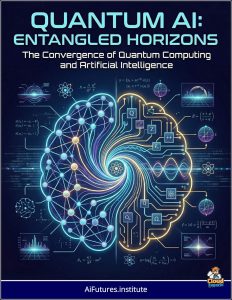 The digital world is approaching a critical juncture known as Q-Day, the moment quantum computers become powerful enough to shatter current encryption standards.
Unlike traditional processors, these advanced machines solve complex problems simultaneously, threatening the security of national infrastructure, the global economy, and personal privacy.
While this transition poses a severe risk, particularly through “harvest now, decrypt later” tactics, experts are already developing post-quantum cryptography to withstand such attacks.
Tech giants and governments are currently racing to implement these quantum-resistant safeguards before existing security measures become obsolete. This shift represents a fundamental transformation in cybersecurity designed to protect the future of the internet from unprecedented processing power.
The 2029 Expiration Date: Is the Internet’s Security About to Melt Down?
Does the internet have an expiration date? We navigate our digital lives under the comforting assumption that our bank records, private communications, and sensitive medical data are shielded by unbreakable encryption. However, a seismic shift in computing power is poised to upend that security.
Google has set a definitive marker on the horizon: 2029. This is the year their roadmap aims for a quantum-resistant ecosystem, effectively sounding the alarm for “Q-Day”—the moment quantum computers become powerful enough to shatter the cryptographic standards that currently hold the modern world together. This isn’t just a theoretical milestone; it is a ticking clock for global cybersecurity.
The Speed Gap: Microseconds vs. Trecedillion Years
To grasp why quantum computing is a “black swan” event for security, we have to look at the staggering disparity in processing logic.
The Maze Analogy Think of current encryption as a massive, near-infinite maze. A standard supercomputer finds the exit through brute force, exhausting one path at a time, hitting a dead end, and restarting. Our security relies on the fact that the maze is so vast it would take a traditional computer billions of years to guess the right path. A quantum computer, however, doesn’t “walk” the maze; it exists in a state of superposition, effectively exploring every possible path simultaneously.
Breaking the Math In a recent benchmark, a Chinese quantum computer completed a specific, highly complex calculation in a mere 25 microseconds. To put that in perspective, the world’s fastest traditional supercomputer would require a trecedillion years—that’s a 1 followed by 42 zeros—to solve the same problem.
As a cybersecurity analyst, the takeaway is clear: when a machine can process all variables at once, the “size” of the mathematical maze becomes irrelevant. Current standards like RSA and ECC (Elliptic Curve Cryptography) aren’t just being challenged; they are being rendered mathematically transparent.
“Harvest Now, Decrypt Later”: The Invisible Theft Happening Today
The industry isn’t waiting for the fallout of 2029 to begin worrying. There is a more immediate, insidious phenomenon occurring right now that experts call “HNDL.”
“Harvest now, decrypt later.”
State actors and sophisticated hacking syndicates are currently vacuuming up and storing massive troves of encrypted data. They cannot read it today, but they are banking on the Q-Day timeline. While a bank password that expires in 90 days might be useless to a hacker in five years, “long-shelf-life” data is a different story. National secrets, deep-cover intelligence, and genetic data remain relevant—and compromising—for decades.
However, a dose of healthy skepticism is required here. Cybersecurity firms are lean, mean, marketing machines, and they love the “Q-Day” narrative because fear is a potent sales tool for “quantum-safe” upgrades. Yet, even if we discount the marketing hype, the threat to our long-term data remains a present-tense crisis.
The Trillion-Dollar Vulnerability: Beyond Just Private DMs
The risk profile of Q-Day extends far beyond your private messages. We are looking at a fundamental threat to the bedrock of civil society, categorized into three high-stakes tiers:
- National Security and Infrastructure: Quantum-capable bad actors could theoretically bypass the protocols securing power grids, air traffic control, and military communications, turning a digital breach into a physical catastrophe.
- The Global Economy: The financial world runs on trust and encryption. With the banking and cryptocurrency sectors heavily reliant on these standards, a successful quantum crack could jeopardize trillions of dollars in assets overnight.
- Personal Privacy: At the bottom of the pyramid is the individual. Every medical record, digital identity, and private interaction ever recorded would be stripped of its protection.
- The Counter-Move: Post-Quantum Cryptography (PQC)
The tech world is fighting back with a movement to rewrite the “security DNA” of the internet. This is the push for Post-Quantum Cryptography (PQC).
PQC isn’t just a software patch; it’s a total overhaul of the mathematical foundations of encryption. It involves creating ultra-complex riddles that are resistant even to quantum logic.
- The Private Sector: Google is leading the charge, integrating PQC into the Android operating system to ensure the hardware in your pocket is future-proof.
- Government Mandates: Recognizing the stakes, governments have begun setting hard deadlines, moving to restrict or decertify any software that fails to meet quantum-resistant standards.
This is a race to swap out the engines of a plane while it’s mid-flight. We are attempting to replace every lock on every digital door before the skeleton key is finished.
Conclusion: A Provocative Look Ahead
We are currently locked in a high-stakes sprint. On one side of the track, we see the breathtaking acceleration of quantum benchmarks, like the 25-microsecond record. On the other side, we have the slow, grinding machinery of global infrastructure upgrades and government bureaucracy.
The 2029 timeline is no longer a distant “what if”—it is a deadline. The proactive work being done in PQC is impressive, but the scale of the transition is unprecedented. Do you believe tech engineers can successfully rewrite the security DNA of our entire digital world before 2029 arrives, or are we simply waiting for the melt down?